Quick answer
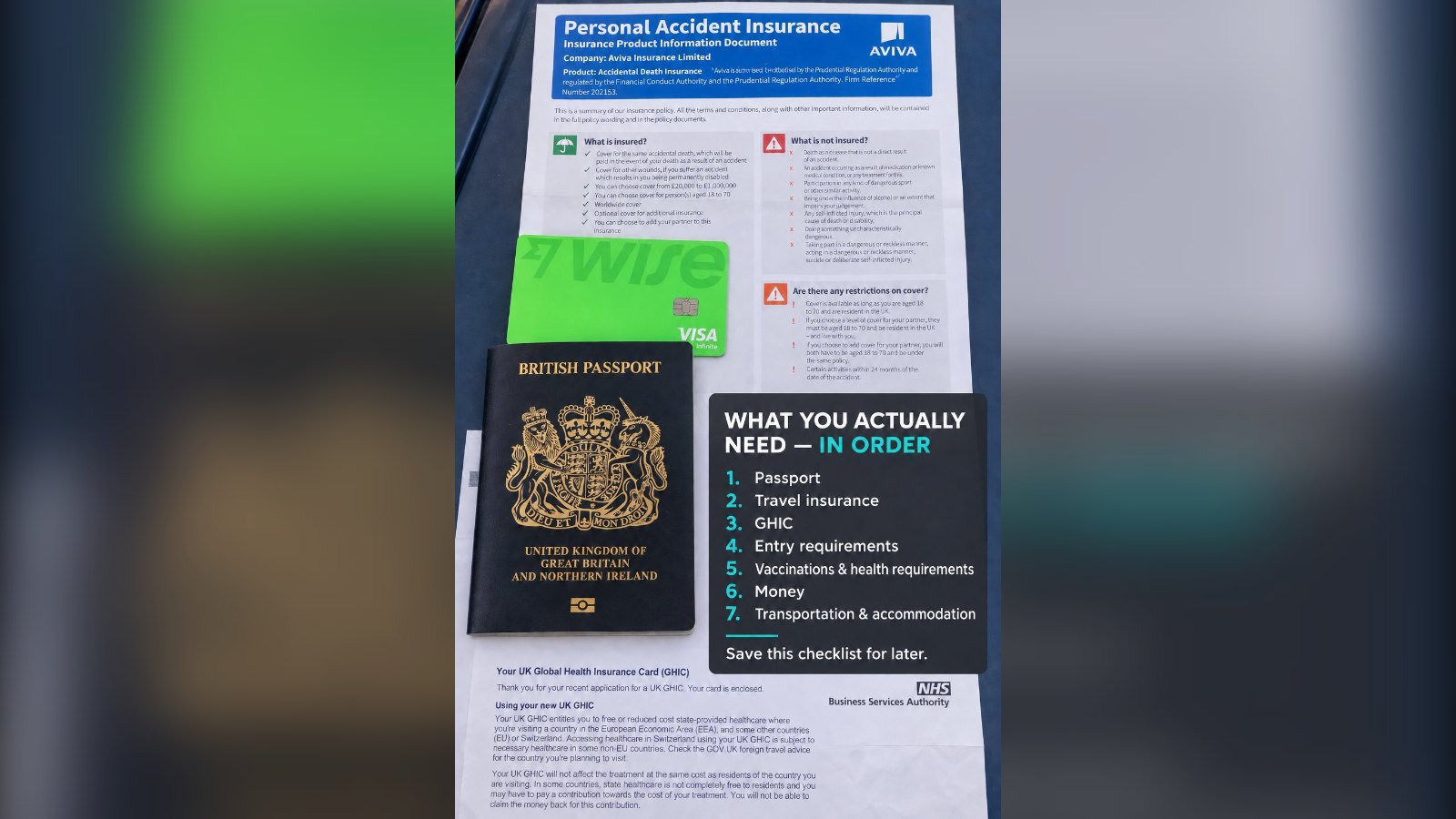
Before travelling abroad, check you have:
- a valid passport (UK applications usually take around three weeks)
- the entry rules for your destination on GOV.UK foreign travel advice
- travel insurance
- a free GHIC card for healthcare in Europe
- a backup way to pay
- any support you need booked
No travel question is silly. Every confident traveller had to learn these things.
There’s a question people are often embarrassed to ask me.
They will ask about sensory rooms at airports, quiet train carriages, ferry cabins or blackout blinds, then just as we finish up, they quietly say:
“This might sound silly, but how long does a passport take?” It doesn’t sound silly.
Travel has a lot of information and people are expected to know about passports, visas, insurance, healthcare, money, booking systems. But who taught you? It’s not like it’s a subject in school. For some people this came from parents or growing up with regular holidays. If that wasn’t your experience, you may start from scratch while everyone assumes you already know.
“Just look it up”
People often say everything is available online. But that assumes you know what to search for.
You can’t check whether you need a visa if nobody has told you visas exist. Once you do start looking, you can quickly end up with dozens of tabs, government guidance, adverts, old forum posts, and feel less certain than when you began. Sorting through it all can be overwhelming.
The difficult part often isn’t finding the information. It’s feeling able to ask for help without being judged for not already knowing. So you say “I’ll sort it.” And the trip doesn’t get booked.
Not knowing how to arrange a trip doesn’t mean you can’t travel. It means there’s information you haven’t been given yet. Every confident traveller had to learn these things at some point.
What do you need to travel abroad?
The exact requirements depend on your nationality, destination and circumstances. These are the main areas to check.
1. A valid passport: A British passport applications made in the UK usually take around three weeks, but can take longer. Standard online fees are £102 for adults and £66.50 for children, fees can change, so check before applying.
Apply directly through GOV.UK. Don’t book travel until you have your valid passport.
If you already have a passport, check: the expiry date, whether it’s damaged, and the passport-validity rules for your destination.
There is no single six-month rule covering every country. Each destination has its own entry requirements, please keep this in mind when your searching for a new destination.
2. Entry requirements and visas: Depending on where you’re going and the passport you hold, you may need a visa, an electronic travel authorisation, additional documents for children, or evidence of accommodation or return travel.
Check the official GOV.UK foreign travel advice for every country you plan to visit, at the time of booking and again before you travel, as requirements can change.
3. Your travel and accommodation bookings
Plane, train, ferry, coach and car journeys offer very different experiences. The cheapest option may not be the most manageable for your needs. The same is true for accommodation, a hotel, apartment, villa or B&B can vary significantly in noise, space and predictability.
Think about your sensory needs, access requirements, food, pace and recovery time not just the price.
4. Travel insurance: You must Buy travel insurance as soon as possible before booking but asap after is acceptable.
Check that it covers: your destination and the full length of your trip, medical treatment and cancellation, your planned activities, and existing physical and mental health conditions. Answer medical questions accurately. Keep your policy number and emergency contact details somewhere you can access without relying only on your phone.
5. Healthcare planning
A UK Global Health Insurance Card (GHIC) is free through the NHS. It gives you access to necessary state healthcare in the European Economic Area and some other countries, usually on the same basis as a local resident, though treatment isn’t always free. A GHIC doesn’t replace travel insurance and doesn’t cover costs such as private treatment or medical repatriation.
Apply only through the official NHS GHIC service. Unofficial websites may charge you.
Some destinations recommend or require vaccinations. Get travel-health advice at least four to six weeks before travelling. If you take medication, check the rules for carrying it into your destination, some medicines that are legal in the UK are controlled elsewhere.
6. Money and a backup plan,
Check which currency is used and how you plan to pay. Make sure you have a backup payment method in case your main card or phone stops working.
Keep copies of important details somewhere accessible: passport details, travel bookings and accommodation address, and your insurance policy and emergency contacts.
7. Any support you need,
Think about what would make the journey more manageable. This might include airport or station assistance, a quieter route or travel time, seating requirements, extra time for transitions, familiar food or a clear itinerary, and recovery time built into the trip.
For flights, request assistance when you book, or at least 48 hours before departure.
Your needs matter as much as the destination and the price.
You are allowed to ask
If you can relate to this, the uncertainty, the feeling that it would be easier not to go, you’re not alone. You may be missing information nobody told you. That can be fixed.
You don’t need to understand everything about travel before you travel. You can ask questions. You can start with something small and familiar. Your first trip doesn’t have to be far away or impressive. It just has to work for you.
What travel question have you never felt able to ask? Send me a message at contact@nerodivergenttravel.com. There are no silly questions.
Questions and answers
How long does a UK passport take?
Usually around three weeks when you apply in the UK, but it can take longer. Do not book travel until you have your passport.
Does a GHIC card replace travel insurance?
No. A GHIC gives you access to state healthcare in Europe and some other countries, but it does not cover things like private treatment or getting you home. You still need travel insurance.
When should I ask for airport assistance?
When you book your flight, or at least 48 hours before you fly.
Need help getting started?
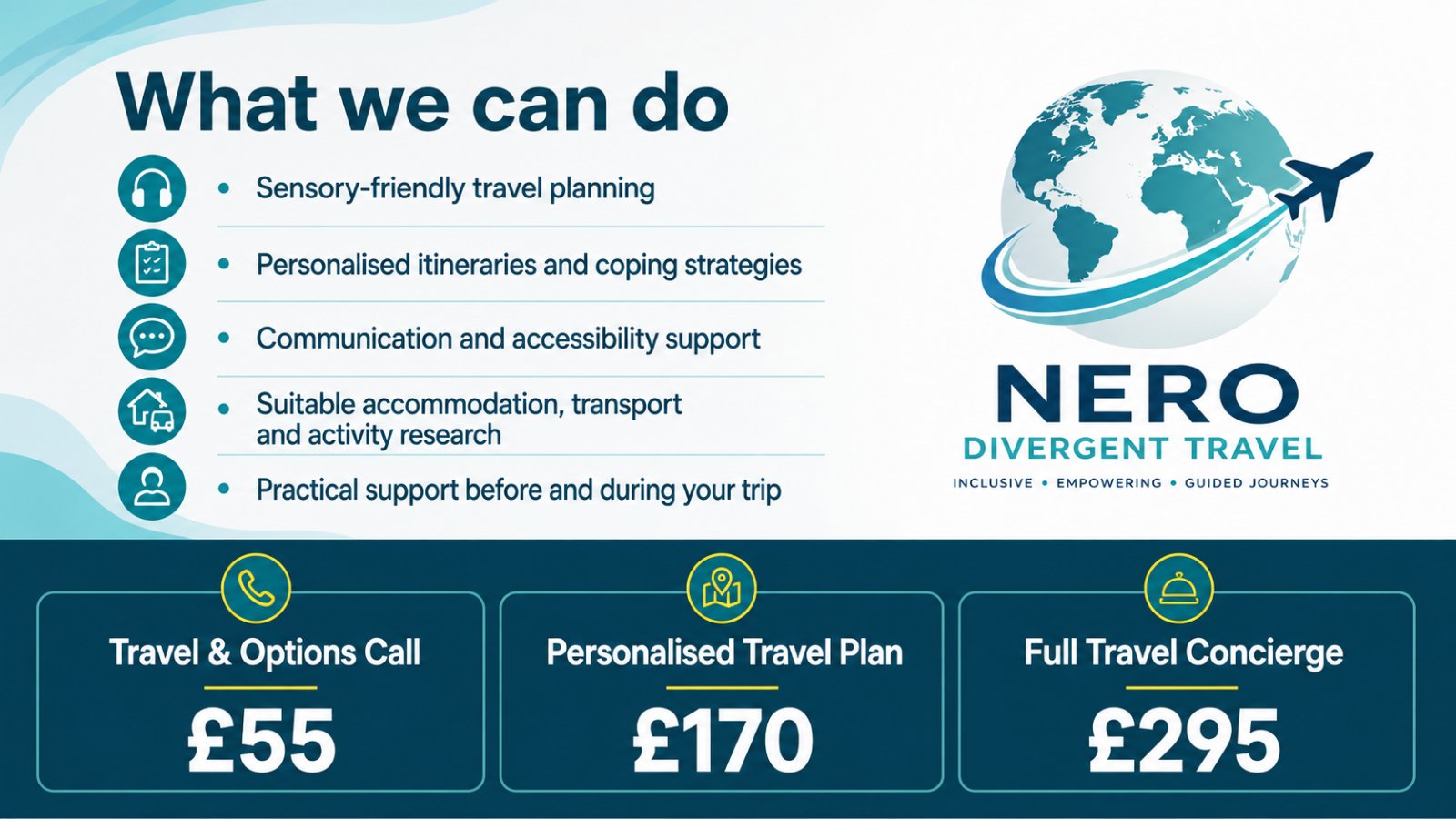
My downloadable Travel Guides & Toolkits are written for neurodivergent travellers and families covering the practical side of booking, what to expect at airports and stations, and how to plan around your individual needs.
The factual sections in this article were checked against current HM Passport Office guidance, the GOV.UK foreign travel checklist, NHS vaccination guidance and CAA assistance guidance.
Jemma Wild
Founder, Nero Divergent Travel Neurodivergent Travel Specialist | Personalised Holidays | Travel Planning & Support for Neurodivergent individuals and families
© 2026 Nero Divergent Travel
Tags: first time travel, never travelled before, travel anxiety, neurodivergent travel, ADHD travel, autism travel, passport, travel insurance, GHIC, travel planning, accessible travel, travel for beginners, UK travel advice, executive function, travel support, Nero Divergent Travel