22 November 2026
The night before our first flight with my son, I didn’t sleep.
I kept thinking about everything that could happen. The security queue, the noise in the departure lounge, boarding the plane and what he might do when the engines started. Once we were on the plane, there would be nowhere to escape if things became too much.
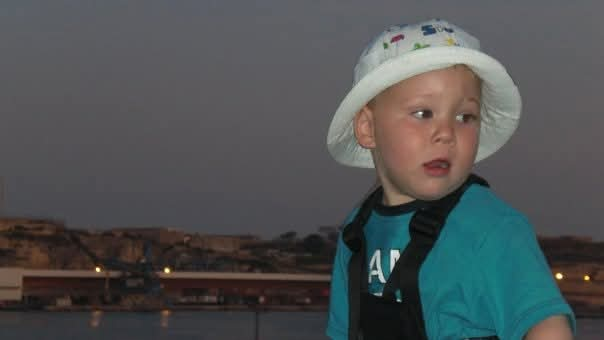
My son was around two and a half or three when he first flew. Our first holiday together had been to Wales when he was 18 months old, but his first flight was to Malta, around July 2009.
I didn’t know then what I know now about travelling with an autistic child. I was learning as we went along.
The airport can be harder than the flight
Our first flight wasn’t the only time airport security caught us out.
On one trip, while I was going through the scanner, he ran off. I was trying to keep track of the pushchair, passports and bags, and the security staff had to catch him.
It was a lot to manage at once.
Then, in 2011, we had another airport experience. We spent forty minutes in a bright, noisy corridor. My son is autistic, and he had no idea what was coming next. When we finally reached the front, a stranger asked him to take his shoes off and walk through a machine on his own.
I see now how much he had to deal with before we even got there.
Airports involve a lot of waiting, instructions, noise, people and changes of routine. For a child who finds those things difficult, the experience can be overwhelming before the flight has even started.
Preparation isn’t about making everything perfect
I tried to research what the airport would be like before we went. Was there a family lane, whether I could go through security with him and whether he would have to take his ear defenders off. (Yes this scared me the most).
I also was there any kids areas, at the time I had no idea about quiet or sensory rooms.
I used to work at an airport. I knew about special assistance because I had been part of providing it. Even with that experience, I still got caught out as a parent.
If you have never worked at an airport and you’re taking a child away for the first time, how are you supposed to know what to ask for?
The Sunflower lanyard, for example, can help signal that someone has a hidden disability and may need more time or support. But what happens when you reach security? Will the person there recognise it? Can they explain what is going to happen before asking your child to do it? If you need to go through with your child, who do you speak to?
It is the same with quiet rooms. Where are they? Are they before or after security? Will they be open when you arrive?
Those details matter. A quiet room after security might give your child somewhere to sit before boarding, but it doesn’t help if you need a break while you are still waiting in the queue.
Give yourself more time than you think you need
Waiting can be difficult, especially when your child doesn’t know what is happening next.
I learned that having more time available doesn’t necessarily make everything easy, but rushing can add another layer of pressure.
Think about what your child need while waiting to travel. That could be ear defenders, something familiar to hold, a favourite activity or somewhere quieter to sit.
Every child is different. What works for one family might not work for another.
Speak to the airline before you travel
Don’t assume that every airport or airline will provide the same support.
Ask questions before you book where possible. Find out what assistance is available 48 hours before travel, what it involves and whether anything needs to be arranged in advance.
It is better to understand what will happen before you arrive than to discover there is a problem when you are already in the queue.
The questions carry on after you land
A hotel’s star rating never told me what I needed to know.
I wanted to know what was above our room and how noisy it might be at bedtime. I wanted to know whether the transfer was a car straight to the hotel or a coach that would stop at several other hotels first.
After the airport and the flight, that can make a big difference for my son.
Then there is food. Is there anything on the menu he will actually eat? If there is a kitchen and a shop nearby, I can make him one of the meals I know he will eat. That is one less thing for either of us to worry about.
And wherever we are going, I want to know where we can go if he has had enough. Even something as simple as knowing we can leave an attraction and come back in can change what we are able to do that day.
These are ordinary details, but they can make the difference between a trip that works for a family and one that becomes much harder than it needs to be.
Your child doesn’t owe anyone a perfect journey
I have heard parents say, “We tried it once. We won’t do it again.”
I understand why. If you have spent a week away trying to help your child through each day, it is hard to spend that money again when you have no idea whether the next trip will go any better.
We are used to looking up whether a place has steps or a lift. I would like airports, hotels and attractions to put the same care into explaining what happens when you get there.
An airport could show what security looks like, step by step. A hotel could explain whether there is a door between the bedroom and the living area, so I know if my son can go to sleep while I am still up.
These are not unreasonable questions. They are the details families need to make informed choices.
The part of our first flight I’ll never forget
I still remember my son sitting in the window seat.
He watched the runway as we waited to take off. As the engines got louder and the plane started moving, he was interested, but he was also so tired after the airport experience.
He ended up sleeping till 10 minutes before landing. He needed to regulate his system, but the things he experienced and he also enjoyed.
My son has been to places I thought he would never cope with. Travelling hasn’t always been straightforward, but finding out what to expect and planning around his needs has helped us do things together, each time we travelled
Is flying with your autistic child possible?
Yes, but it helps to understand what your child might find difficult and what support is available before you travel.
There is no perfect checklist that works for every autistic child. Some children may find the airport harder than the flight. Others may struggle with the change of environment, food, waiting or being away from familiar routines.
The important thing is being able to find out what to expect and make decisions that work for your family.
When I think back to our experiences at airport security, I wish I had known more about what to ask before we travelled. Some of those questions only became clear after we had experienced the difficult moments ourselves.
Families shouldn’t have to find everything out the hard way.
Have you travelled with your autistic child? What did you wish you had known before you went? or are you trying to work out how you can travel easily ?
I’d love to hear about your experiences or the questions you’re worried about asking. Sometimes the questions parents feel embarrassed to ask are actually the most important ones.
Jemma Wild
Founder, NERO Divergent Travel | Neurodivergent Travel Specialist | Personalised Holidays | Travel Planning & Support for Neurodivergent persons
https://www.nerodivergenttravel.co.uk or https://www.nerodivergenttravel.com
Tags: flying with an autistic child, autism airport tips, autistic child on a plane, SEND family travel, autism friendly flying, airport sensory overload, autism and airports, flying with autism, neurodivergent family travel, autistic child holiday, SEND holiday planning, autism travel tips, sensory overload airport, flying with special needs child, autism family holiday, neurodivergent travel, airport anxiety autism, travelling with autistic child, autism flight tips, SEND travel planning