Founders Story

Why I started Nero Divergent Travel: not from a gap in the market, but from living with ADHD and dyslexia and raising an autistic son.

By Jemma Wild

·
Why I still help neurodivergent travellers

I did not start Nero Divergent Travel because it sounds like a good idea

I started it because I understand the problem.

Not from the outside. Not from research or a market gap analysis. From the inside, from being the parent of a son who finds it a bit much in different ways, and from the realisation that the travel industry offers people like us is not enough.

I have talked about my experience before with my son in the airport, he was barely walking. I had him in a pushchair, but he was screaming to get out. I was carrying the passport, tickets, hand luggage, and pulling things out of my bag for security. When I got him out, I let him walk by himself through the gate scan and he ran off. The staff had to catch him. When I got through and had to get scanned, once I got him back in the pushchair and packed everything again while he was screaming the place down.

He didn’t stop until we got on the plane. Then he fell asleep for four hours straight.

At the time, I thought it was pure exhaustion. Now I understand: he was regulating himself. All that noise, chaos and people, it was overwhelming. He was doing the only thing he could do. Sleep, where he escaped from all of it, and he could rest.

The industry asks the wrong questions

I have ADHD and dyslexia. My son is autistic. Between the two of us, we have accumulated a lot of experience of being somewhere that wasn’t built with us in mind.

The mainstream travel industry is very good at answering some questions. Where do you want to go? When? How many people? What’s your budget?

Those are useful questions. But they’re not the questions I need answered.

The questions I need answered look different. What does the transfer involve, how long, how many stops, how many transitions, What do they serve for breakfast, and is there one thing on the menu my son will actually eat? Pepperoni pizza.

Is there somewhere quiet to decompress when it gets too much, because it will get too much, at some point, and I need to know what we do when it does?

These questions exist because sensory load is real. Transitions are hard. Uncertainty is hard. Unpredictability, even small, ordinary unpredictability, can undo a day in ways that are difficult to explain to someone who hasn’t experienced it.

The mainstream booking process doesn’t ask these questions. It gives you a star rating, a list of amenities, and photographs taken by someone whose job was to make the place look appealing.

That’s not enough information. Not for us.

It’s not just about physical access

There’s a version of “accessible travel” that means ramps and hearing loops and wide doorways. Those things matter. But they’re not what I’m talking about.

I’m talking about a family who spent three months researching a holiday and still came home early because the hotel was overwhelming. I’m talking about an adult who wants to travel alone but doesn’t know whether the destination will work for them, and can’t find the answer anywhere. I’m talking about a parent who would love to take their children somewhere different but can’t face the research, and quietly lets the idea go.

The information exists, most of it. The noise level of a resort can be found out. The transfer time and type can be checked. The room that’s away from the entertainment venue and the lift shaft, it exists, and it can be requested. The restaurant with something safe on the menu can be identified before arrival.

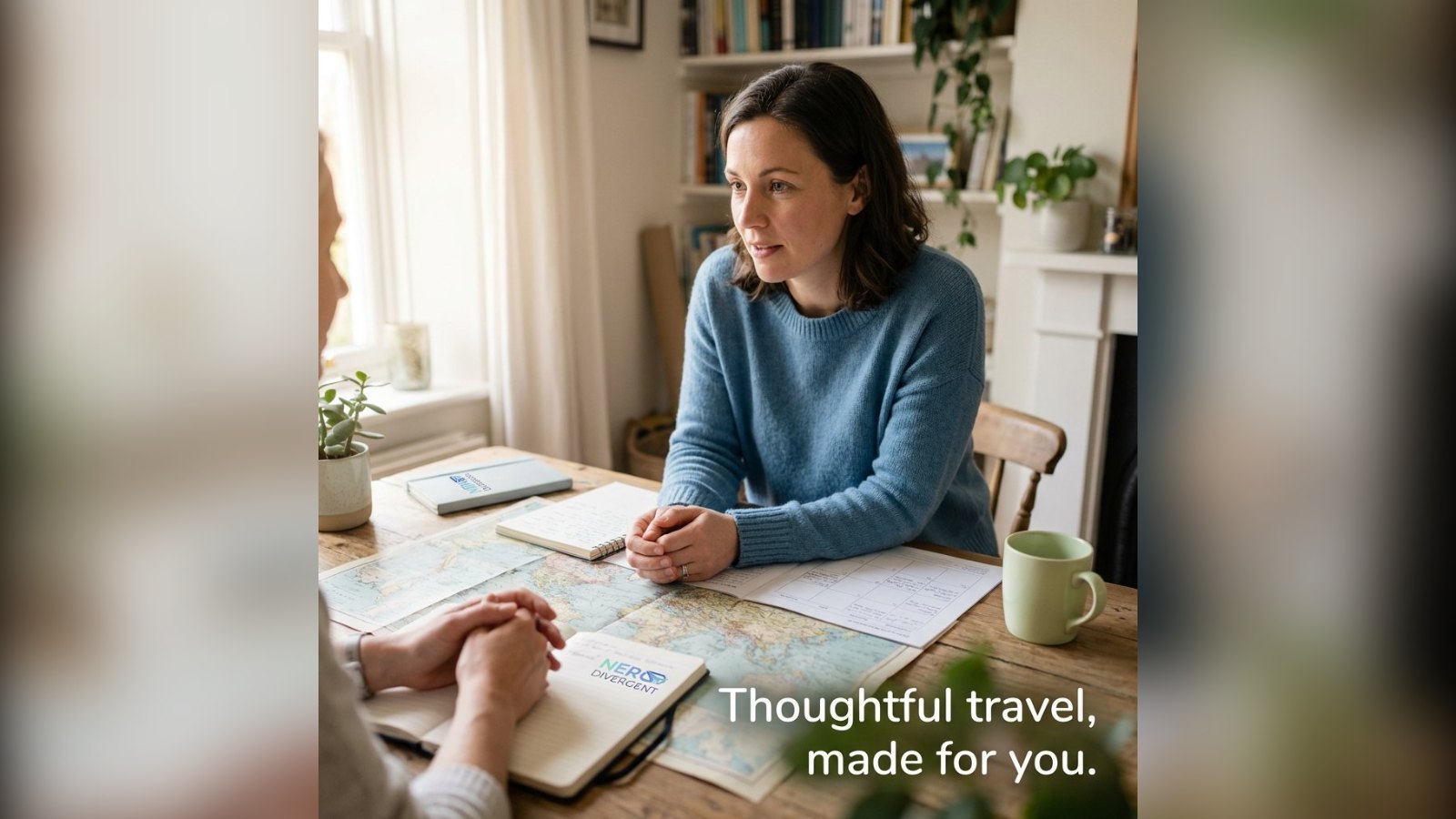
What I do is different from having access to the booking system is the last step. The actual work is thinking, filtering, asking the questions most people don’t know to ask, and explaining…

You don’t need a diagnosis

You don’t need a diagnosis for me to help you. You don’t need documentation. You don’t need to prove anything.

There are adults who have always found certain environments overwhelming but have never had a formal assessment. There are families waiting for one. There are people who simply know that conventional travel is hard for them, that crowds or unpredictability is too much, or that they need to know exactly what to expect before they can relax enough to enjoy anything.

My position isn’t: “tell me your diagnosis and I’ll accommodate you.”

It’s simpler than that. what makes travel difficult. what you need to know in advance. what needs to be predictable, and what needs to be avoided.

And then we plan around it together.

That’s the whole thing. For those of you that can book blindly and just go and hope for the best. Then I am not the right person to help you.

A good holiday looks different for different people

The industry’s definition of a valuable holiday is often: how much can you fit in? How many experiences, how many places, how many things to say you did, and what looks good on Instagram?

That’s not what a good holiday looks like for many families I work with.

For some, a good holiday is a week where nobody had a meltdown. For some it’s four days somewhere quiet enough that everyone came home feeling like themselves. For some it’s the first time in three years they didn’t come home more exhausted than when they left.

A rest day isn’t a wasted day, it’s a most important day. A quieter hotel matters more than being closest to the main attraction. Knowing exactly what happens at the airport, the layout, the queues, can matter more than an upgrade. Having one safe meal available every day can be the difference between a holiday that works and one that doesn’t.

Success isn’t doing everything. It’s the traveller being able to experience the trip in a way that works for them.

Sometimes that looks impressive from the outside. Sometimes it looks like four days in a cottage with a private garden and no itinerary.

Both are right.

Why I am still wanting to help

I’m not going to tell you the first year of running this business has been easy, it really hasn’t. There have been months without customers, technology problems, funding rejections, a Google Business Profile that was declined because I’m online-only. There have been weeks where I seriously asked myself whether any of this was worth it.

The reason I started has not changed. The problem has not gone away.

There are still families who find travel overwhelming, parents doing hours of research by themselves, in the evenings after work and after fighting for their child’s school, trying to work out if somewhere will be okay.

There are still adults who want to travel but don’t know how, and how to find a destination will work for them. There are still people who have let go of an idea of a good holiday, because the research feels like too much, or because the last time they tried it fell apart.

That’s why I started, and the reason I’m still there.

What I want to change

Nero Divergent Travel exists because I believe neurodivergent people and their families deserve to travel, but to have enough information, preparation and support for it to become genuinely possible.

With the right questions asked in advance. With someone who understands what they’re looking for. With a plan that accounts for how your brain actually works, rather than how the industry assumes you work.

Because one of the things that keeps coming up is this: the families who most need a break are often the families who can least easily access one. The parents who’ve spent a year in a tribunal. The families are living with complex needs and limited support. The people for whom a few days somewhere different wouldn’t just be a nice thing, it would be the difference between continuing and not.

I want to help those families too. Not only the families who can fund specialist support from the start. The ones who need a form of help that doesn’t yet exist for them.

Let me know what makes travel difficult for you, and we’ll build something around it.

What made you realise that travel needed to work differently for your family, or for you? I’d love to hear your story. Send me a message at contact@nerodivergenttravel.com.

Jemma Wild
Founder, Nero Divergent Travel
www.nerodivergenttravel.com

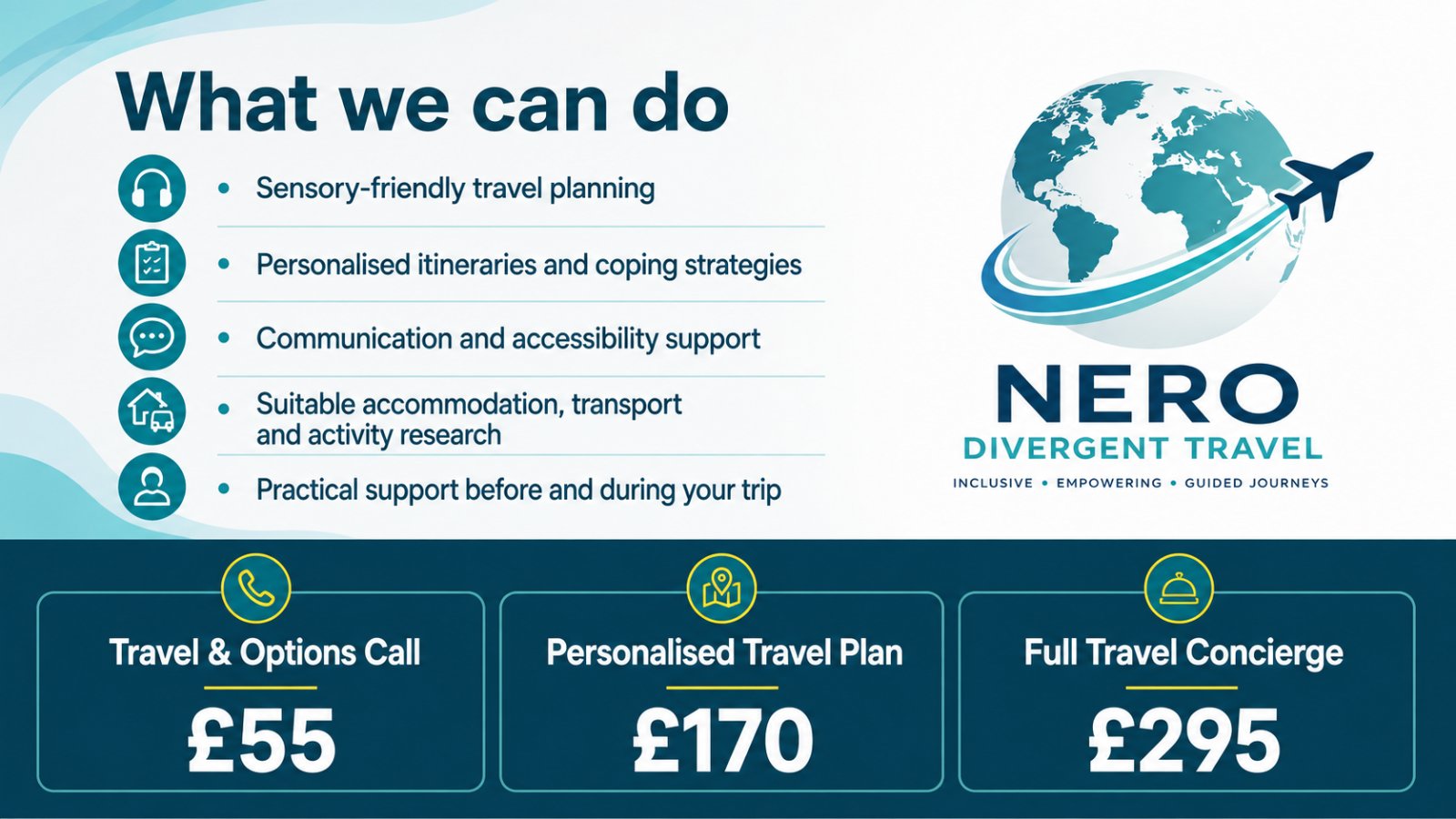
Nero Divergent Travel provides personalised travel planning and support for neurodivergent individuals and families. No diagnosis required, let me know what you want, need and what to avoid.

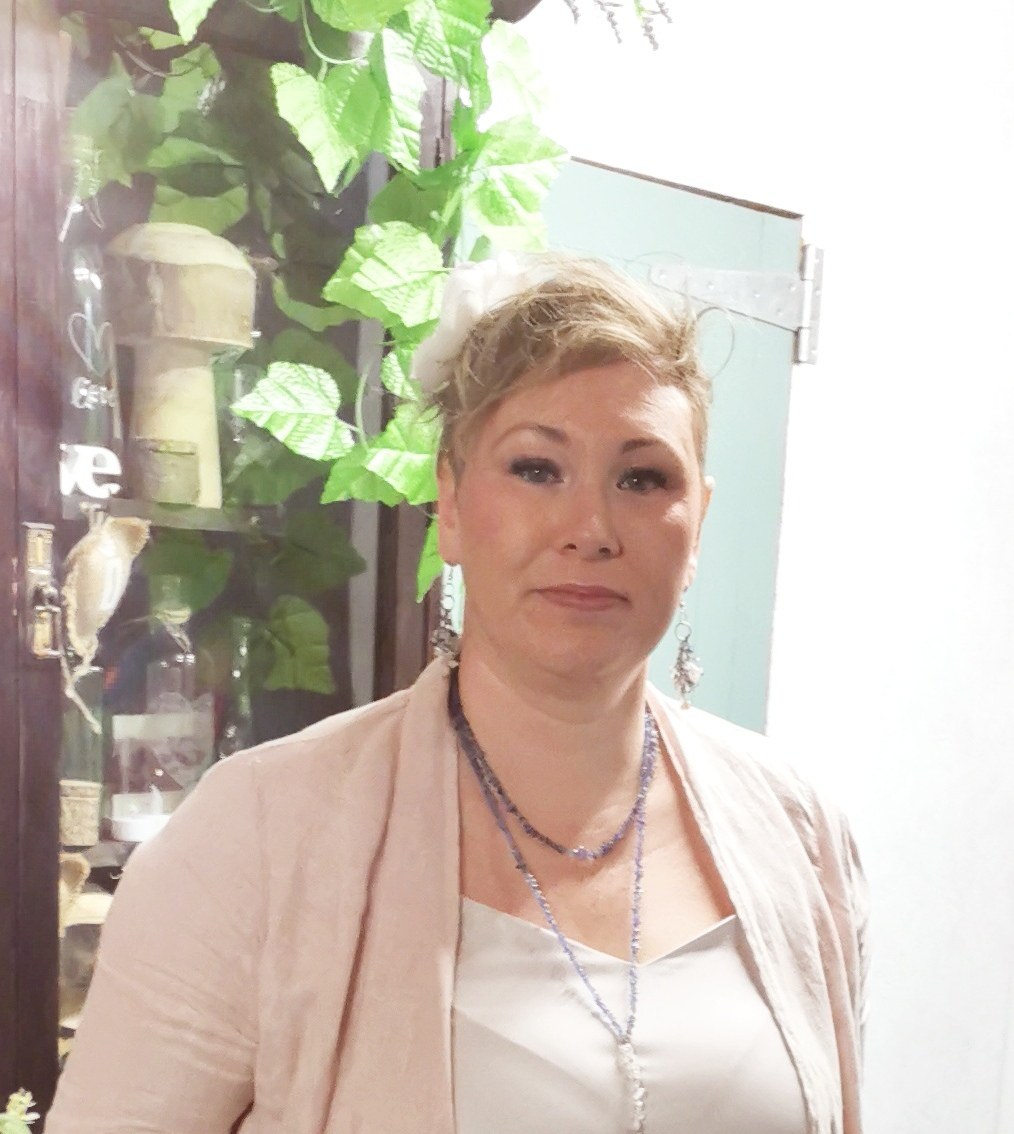
Jemma Wild, Founder of Nero Divergent Travel

About the author

Jemma Wild, Founder of Nero Divergent Travel

I’m Jemma. I’m a mum to an autistic son, and I have ADHD and dyslexia. I understand because I’ve lived it, not just because I’ve learnt about it. I plan around the person, not a label.

Topics:
← Back to all articles

Discover more from Nero Divergent Travel

Subscribe now to keep reading and get access to the full archive.

Continue reading