Quick answer
ARFID (Avoidant/Restrictive Food Intake Disorder) is not fussy eating. A child with ARFID will not simply eat new food because they are hungry on holiday. Plan around safe foods before you book: check what the supermarkets stock, look for self-catering with a kitchen, and pack enough of the key safe foods as a backup.
The Holiday Problem Nobody Talks About
There’s a question that decides whether some families go on holiday at all, and it isn’t “can we afford it? “It’s: “What will my child actually eat when we get there?”
If that question made your stomach drop, this article is for you. And if it sounds dramatic if you’re thinking “kids eat what they’re given on holiday” I’d gently ask you to keep reading, because this is one of the most misunderstood barriers in family travel.
ARFID is not fussy eating
ARFID: Avoidant/Restrictive Food Intake Disorder is not a picky phase. It’s not bad parenting. It’s not something a child “grows out of” because they’re hungry enough in Spain.
For someone with ARFID, food that’s wrong, wrong brand, wrong texture, wrong shape, wrong plate isn’t food. The body treats it like a threat. A child who eats six foods at home doesn’t suddenly eat paella because the sun is out. I know, because I’ve lived it.
Our Germany story
My son eats pepperoni pizza. That’s safe food. And here’s something I didn’t know until we were standing in a German supermarket: you cannot get pepperoni pizza in Germany. It simply isn’t a thing there.
So my son lived on brioche and crisps. For days. In a country full of food, my child was hungry not because he was being difficult, but because his safe food didn’t exist there and nothing else was safe.
What happened next is the part everyone needs to understand. Eventually he tried a salami pizza. But this is everything he decided. Not me encouraging, not a waiter suggesting, not “just try one bite.” He looked at it, weighed it up in his own time, and chose. If anyone had pushed, it would never have happened. That’s how ARFID works: it has to be their choice, or they will not eat it.
Even now, years later, the rule he made stands: salami only if pepperoni isn’t possible. His rule, made by him. France is easier but even France doesn’t sell Chicago Town pepperoni pizza, and if you’re an ARFID parent, you know that the brand is not a small detail. The brand is the food.
The travel industry’s answer to all of this? “Kids’ menus available.” That’s it. That’s the whole offer.
What families do instead
I speak to families who have quietly stopped travelling because of food. Not because of flights, not because of money or food. And the ones who do still travel are doing logistics the industry never sees:
A suitcase weighed down with safe-brand cereal because the local version tastes different. Hours on Google Street View checking if there’s a supermarket near the hotel. Emails to hotels asking if plain pasta is possible really plain, no sauce, no garnish, no “just a little butter.” Self-catering booked not for the savings but for the kitchen.
That’s not fussiness. That’s a family doing professional-grade planning with zero support, every single holiday.
The cost of getting it wrong
Here’s the part that doesn’t get said out loud: one bad food experience abroad can set a family back years. Not just the ruined week the aftermath. The child who now associates “holiday” with hunger and fear. The parents who say “never again” and mean it.
When I plan trips for families with ARFID in the picture, food is not a footnote on the itinerary. It is the itinerary. Does the destination actually stock the safe food, or are we about to repeat my Germany mistake? What’s the backup if the supermarket doesn’t have the brand? Which restaurants will serve plain food without a fuss and without commentary from staff? Can we get a kitchen? Can we pack enough of the one critical food to survive the week if everything else fails?
None of that is on a kids’ menu.
If food decides your holidays
If your family’s travel decisions are quietly being made by what’s in the cupboard, please hear this: you are not being difficult, your child is not being naughty, and you don’t have to choose between staying home forever and a week of mealtime battles.
Holidays can be planned around safe food the same way they can be planned around sensory needs and rest days, because travel should adapt to your family. Not the other way round.
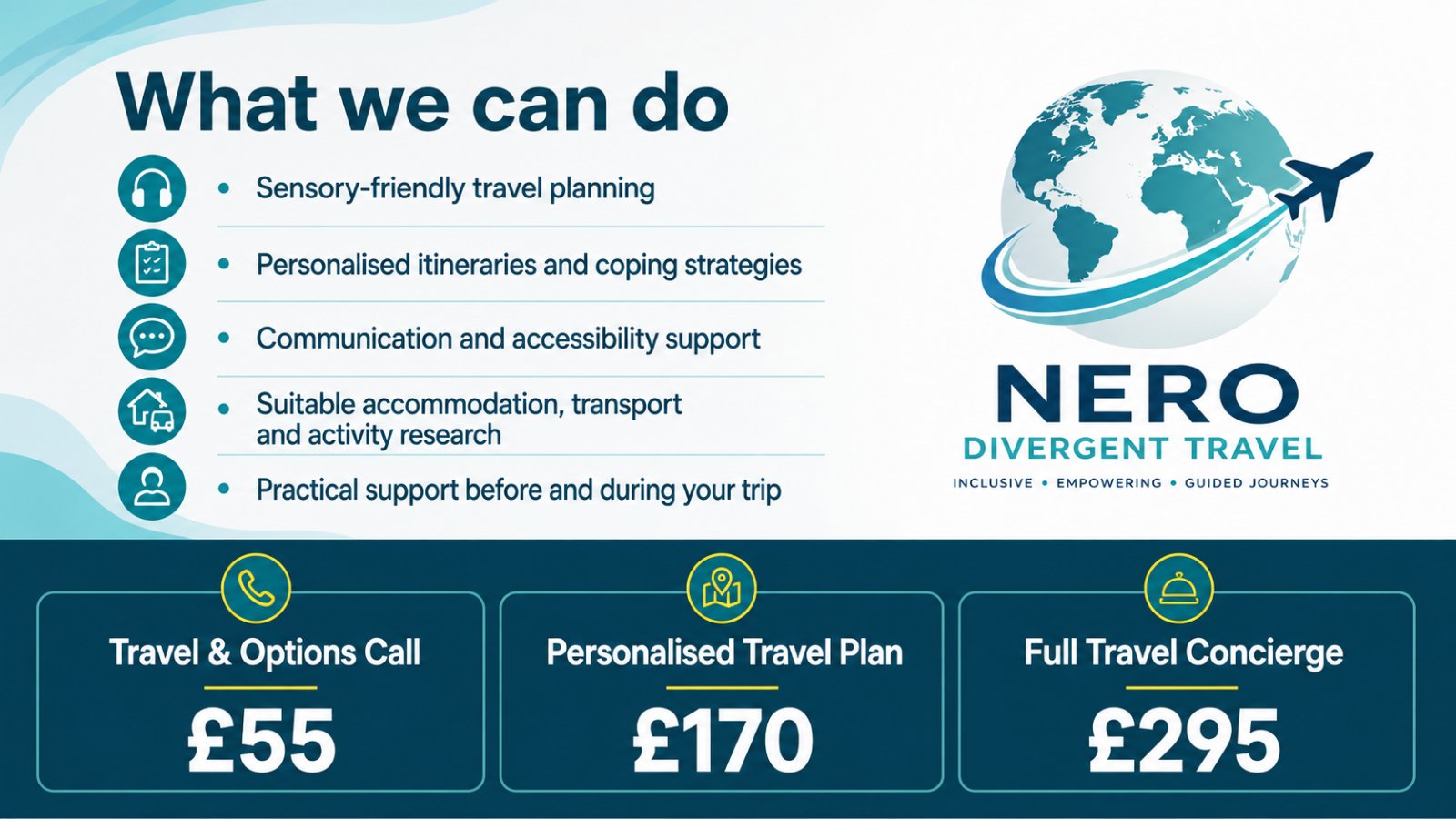
This is exactly what I do at Nero Divergent Travel. If you want to talk it through with someone who actually understands ARFID, get in touch. No menus to fight. No judgement at the table.
Questions and answers
Can I find my child’s safe food abroad?
Not always. Brands differ by country. For example, we could not find pepperoni pizza in Germany, so check before you book.
Will my child eat new food if they are hungry enough?
With ARFID, no. Any change has to be their own choice, in their own time. Pushing usually makes it worse.
nerodivergenttravel.com or contact@nerodivergenttravel.com
Jemma Wild is the founder of Nero Divergent Travel, planning travel for neurodivergent individuals and families, and the mum who now checks pepperoni availability before booking anything.