Assuming Everyone Travels the Same Way
Picture the scene.
You’re at the airport. You’ve been preparing for this trip for weeks, not in the way most people prepare, but in the way you have to prepare. You’ve memorised the terminal layout. You know which gate is quietest. You’ve already eaten because the food smells in the departure hall are overwhelming. You’ve allowed extra time because rushing sends your nervous system into freefall.
And then you get to the desk and ask for the assistance you’re entitled to.
The member of staff doesn’t say anything. They don’t need to. The glance at their colleague says it all. A small sigh. A barely-there eye roll. Because now their day just got more complicated. Now they have to wait. And they’d rather not.
Meanwhile, three desks down, the same member of staff is all smiles for the family who look like they belong on a travel brochure. Effortless. Easy. Exactly the kind of passenger the industry was designed for.
I’ve also seen wonderful staff go above and beyond for any passengers.
The assumption nobody questions
The travel industry was built on a single assumption: that travellers are broadly the same.
They may tolerance for noise, crowds, and unexpected changes. Same ability to process a wall of choices and pick one confidently. Same capacity to smile through a delayed flight, a changed gate, a hotel room that looks nothing like the photos. Same resilience when things go wrong.
That assumption is wrong for 1 in 7 people in the UK.
Neurodivergent travellers, people with ADHD, autism, dyslexia, sensory processing differences, anxiety, navigate travel in a fundamentally different way. Not a worse way. Not a way that needs fixing. A different way that the industry has simply never bothered to design for.
The result isn’t just inconvenience. It’s a slow accumulation of moments that tell you, without words, that you weren’t really meant to be here.
What it actually costs
The industry talks about accessibility in terms of ramps and lifts. And those matter. But they’re not the whole picture.
The real cost of getting it wrong for a neurodivergent traveller isn’t always visible. It’s the holiday that looked perfect in the brochure but fell apart on day two because nobody asked about sensory triggers. It’s the Instagram-perfect resort that turned out to be overwhelmingly loud, chaotic, and impossible to decompress in. It’s the itinerary so packed that by day three, the person it was supposed to be for has shut down completely not from laziness, not from being difficult, but from a nervous system that finally hit its limit.
And then there’s the human cost. The self-worth that takes a hit every time you feel like a burden. The self-confidence that erodes when you’re made to feel your needs are an inconvenience. The quiet decision, made by thousands of families every year, that it’s simply easier not to travel at all.
That decision has a price tag. And the travel industry is paying it in lost bookings, in narrowed customer bases, in an entire market segment it has written off by accident.
The staff who don’t hide what they feel
I want to come back to that moment at the desk. Because it matters.
When a passenger requests special assistance, what they’re asking for is time. Patience. A small adjustment. They are not asking for sympathy, or a fuss, or to be treated as lesser. They are asking to be met where they are.
What they sometimes get instead is a performance of reluctant compliance. Staff who make it clear through body language, through tone, through the speed at which they rush through the process that this passenger is slowing things down. That they would rather be anywhere else. That the next passenger, the easy one, is already in view.
I have seen staff go out of their way for passengers they perceive as easy, wealthy, or low-maintenance. I have seen those same staff make no effort whatsoever to hide their frustration with passengers who need more.
We cannot help the way our brains or bodies work. We should not be begrudged for it.
What actually helps
The thing that changes everything for a neurodivergent traveller isn’t a special programme or a dedicated lane. It’s being asked three questions before anything else.
What do you need? What do you want? And what do you want to avoid?
Those three questions, genuinely asked, genuinely listened to, change the entire shape of a trip. They replace assumption with understanding. They put the traveller in the position of expert on their own experience, which is where they belong.
They also, as it turns out, lead to better holidays. Holidays where the itinerary fits the person. Where the accommodation suits how that person’s nervous system actually works. Where there’s room to rest, to recover, to feel safe, not just room to see things and tick boxes.
Travel should expand your world. For too many neurodivergent people, the industry as it currently stands does the opposite. It contracts it. It makes staying home feel like the sensible choice.
That’s the injustice. Not dramatic. Not loud. Just the quiet, systemic assumption that everyone travels the same way, and that if you don’t, that’s your problem to manage alone.
Travel should adapt to the person. Not the person adapting to travel.
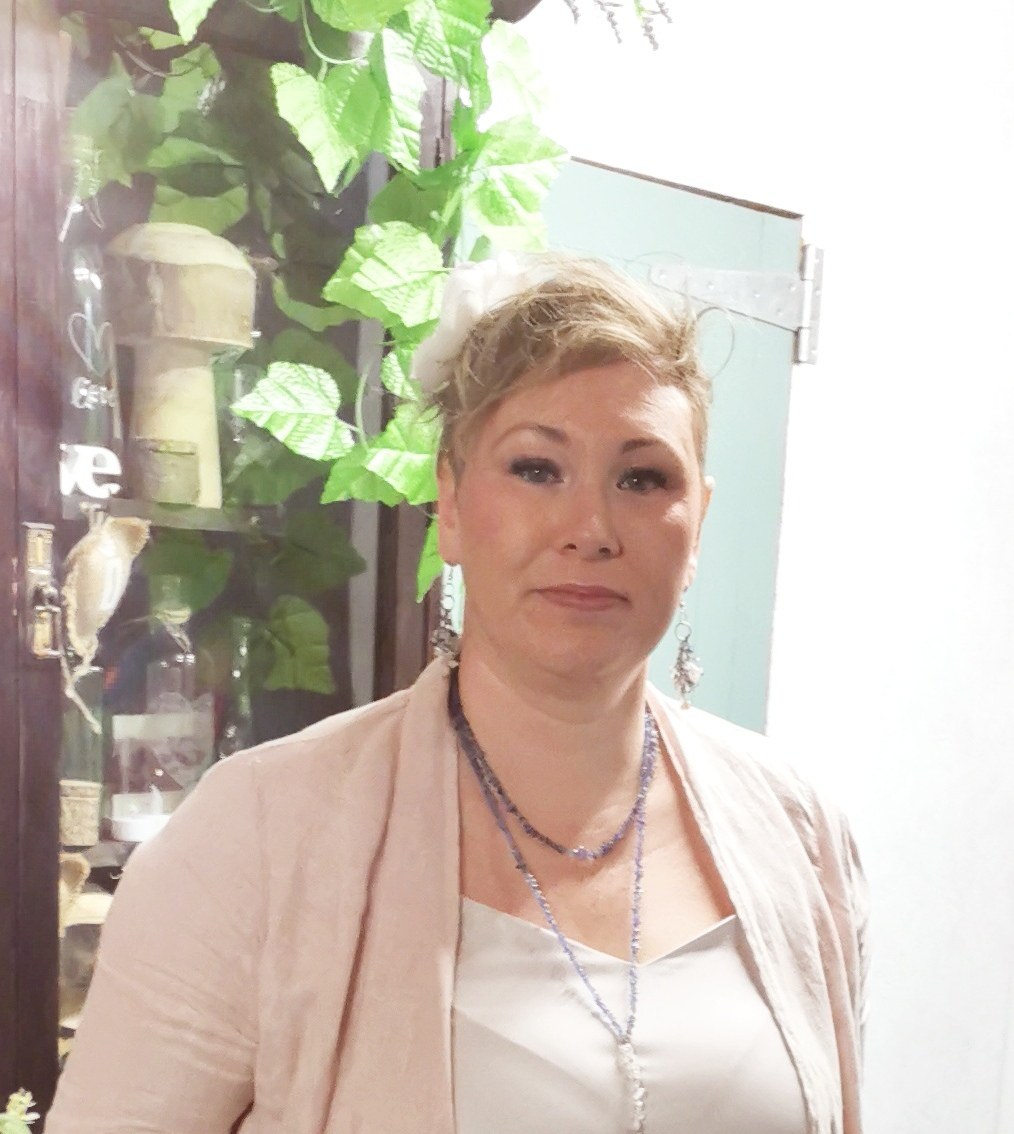
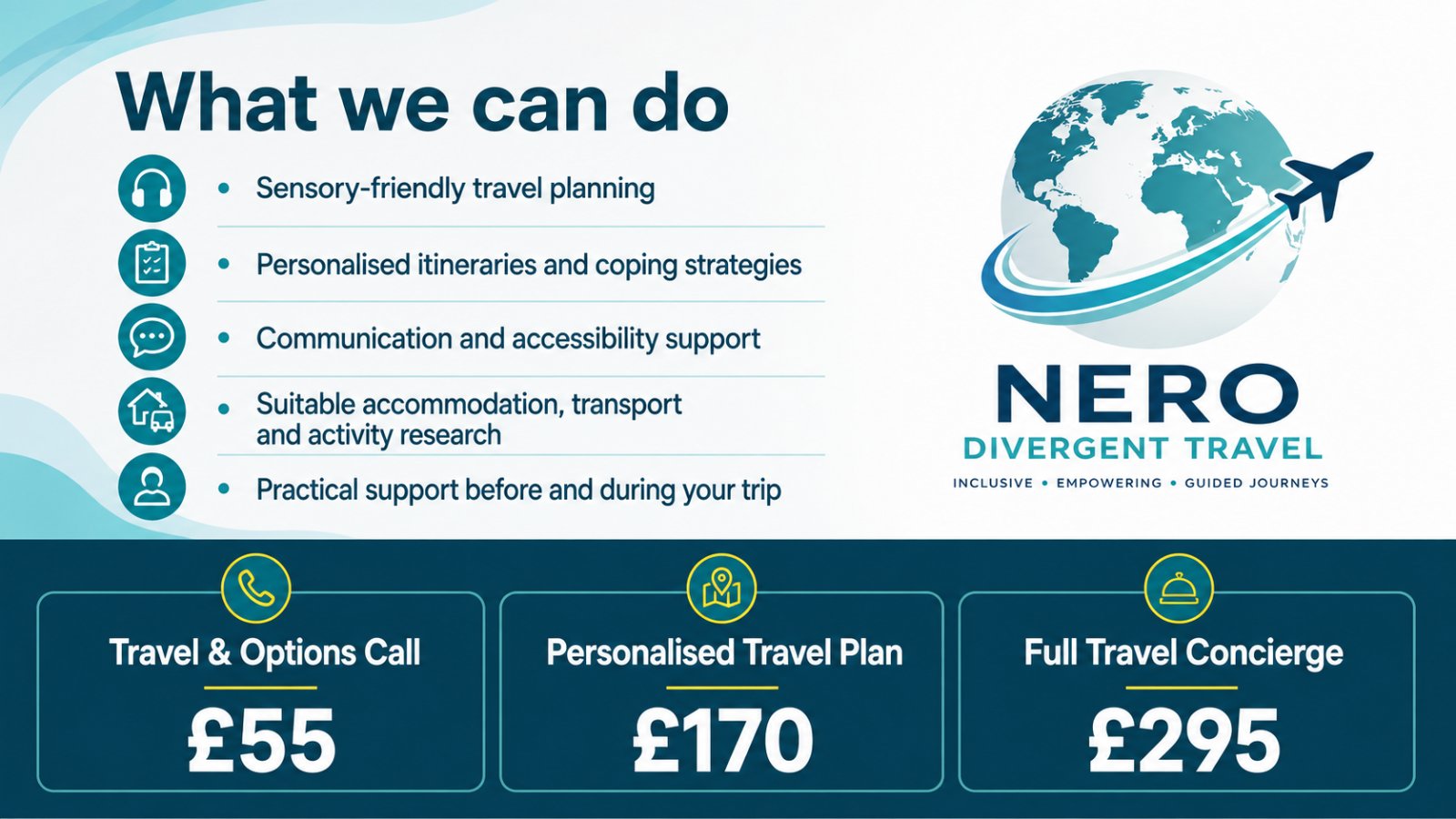
Jemma Wild is the founder of Nero Divergent Travel, a specialist travel planning service for neurodivergent individuals and families. She is ADHD and dyslexic, and built the business she needed and couldn’t find.
nerodivergenttravel.com | “Travel That Fits You” — podcast on Spotify